In this review, you will see what it is actually like to trade on Fanatics Markets, how pricing and liquidity behave in live markets, and how the platform compares to sportsbooks and other prediction market sites.
You will also learn where the experience currently falls short, including market depth and incentives, so you can decide whether this platform fits your goals before committing real money. Let’s get geeky!
What is Fanatics Markets? A Quick Summary
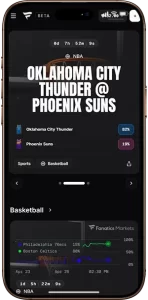
Fanatics Markets operates as a federal derivatives exchange rather than a state-licensed sportsbook. Instead of placing bets against a house, you’re trading event contracts with other users. Each contract is priced between $0.01 and $1.00, with the price representing the market’s live probability estimate of an outcome happening. If the outcome occurs, your contract settles at $1. If it doesn’t, it goes to zero.
Right now, Fanatics Markets is best for three groups: existing Fanatics users who want the easiest possible entry into prediction trading, sports fans in restricted states like California and Texas who haven’t had access to legal alternatives, and curious beginners intimidated by more complex platforms like Kalshi.
The market selection is still developing, liquidity can be thin outside major sports events, and there are no promotional incentives at launch. But the foundation is strong, the roadmap is ambitious, and the regulatory structure gives it real staying power. If you want to understand what trading outcomes feel like before committing serious capital, this is one of the most approachable ways to start.
Fanatics Markets Bonuses & Promotions
When Fanatics Markets launched in December 2025, there were no promotional offers whatsoever, no welcome bonus, no promo code, no deposit match. But now Fanatics has introduced limited-time promotions, including a fee rebate program that credits traders based on transaction fees paid during qualifying periods. Some users have also reported tiered welcome bonuses tied to first-week trading volume.
That said, don’t walk in expecting the same type of bonuses you’d find at a traditional sportsbook. Prediction market platforms operate on thin margins and low per-trade fees; there’s simply less room for massive signup offers.
Even established platforms like Kalshi keep their welcome offers modest. The real value on Fanatics Markets is the low cost of trading itself, not upfront incentives.
Always check the promotions section inside the app for current offers, as these change, and the terms govern what’s actually available in your state.
Is there a Fanatics Markets Welcome Bonus?
As of 2026, there is no welcome bonus available at Fanatics Markets. You won’t find a promo code during sign-up, and depositing funds doesn’t trigger any bonus credits or free trades. Access is granted simply by being in an eligible state and completing the standard account verification process.
This stands in stark contrast to Fanatics Sportsbook, which regularly offers deposit matches and risk-free bet promotions. The difference likely comes down to regulatory positioning. Fanatics Markets operates as a CFTC-regulated derivatives exchange, not a state-licensed gambling product, and that compliance framework may limit the types of incentives they can offer.
Other Promotions at Fanatics Markets
Besides the missing welcome offer, there seems to be an effort to offer ongoing or seasonal promotions or special events that reward activity.
That said, one surprising omission is the lack of FanCash integration. If you’re familiar with Fanatics’ rewards currency, you know it applies to retail purchases and sportsbook wagers.
Market trades, however, don’t earn FanCash, and you can’t spend existing FanCash on contract purchases. That disconnect feels odd given how much Fanatics emphasizes its unified ecosystem elsewhere.
How to Get Started at Fanatics Market
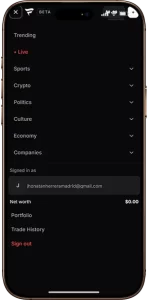
Getting started on the platform is still remarkably straightforward, especially if you already use the Fanatics app. Here’s exactly how you go from zero to placing your first trade.
Step 1: Download the Fanatics Markets App
Fanatics Markets is a standalone app, separate from the Fanatics Sportsbook. Search for “Fanatics Markets” directly in the iOS App Store or Google Play and download it. As of 2026, the platform also has a basic web presence at fanaticsmarkets.com, though the full trading experience is app-based.
Worth knowing: You must be at least 21 years old to use Fanatics Markets. This is worth noting because it’s a higher age minimum than some competing platforms like Kalshi, which sets its bar at 18. Fanatics has taken the stricter approach in line with its sportsbook operations.
Step 2: Log In or Create Your Account
Existing Fanatics users can log in immediately using their current credentials. There’s no additional verification required at this stage. New users will go through standard account creation, which includes identity verification and basic Know Your Customer checks. Since Fanatics already runs a regulated sportsbook, this process is mature and straightforward.
Step 3: Complete the Trading Account Setup
Because Fanatics Markets operates as a CFTC-regulated platform, you’ll need to activate a derivatives trading account before you can place your first trade. This involves reviewing and accepting a separate set of terms specific to event contract trading. During my testing, this took about two minutes. It’s a series of clear disclosures explaining how contracts work, what the risks are, and how settlement happens. Once confirmed, trading access unlocks immediately.
Step 4: Fund Your Shared Wallet
Fanatics Markets uses its own wallet managed through the app. Funding is straightforward. Deposit using your preferred payment method, and buying power becomes available once the deposit is credited. There’s no separate verification step needed for each deposit.
Step 5: Place Your First Trade
With your account funded, browse the available markets in categories like Sports, Politics, or Finance. Select a market that interests you, choose your side (YES or NO), decide whether to use a market order or set a limit price, and confirm your trade. The platform shows your maximum risk and potential payout before you commit, so there are no surprises. From app update to holding your first position, the entire process takes less than ten minutes.
Is Fanatics Markets Legit and Safe?
Yes, Fanatics Markets is legitimate and operates under one of the strongest regulatory frameworks available in the prediction market space.
The platform is regulated by the Commodity Futures Trading Commission (CFTC), the same federal body that oversees major futures and derivatives exchanges in the United States. This isn’t self-regulation or a vague compliance claim. It’s formal oversight by a federal agency with enforcement power.
The regulatory structure works through a partnership with Crypto.com Derivatives North America (CDNA), which operates the actual exchange infrastructure where contracts are listed, traded, and settled. Fanatics enters the picture through Paragon Global Markets, a CFTC-registered introducing broker that the company acquired specifically to support this launch.
Customer funds are held with CDNA under standard segregation requirements, which means your money is kept separate from company operating funds. This is a baseline protection in regulated derivatives markets.
Beyond regulation, Fanatics Markets benefits from being built into an ecosystem that already handles hundreds of millions of dollars across its sportsbook and retail operations. The security infrastructure, responsible gaming controls, and payment processing systems are all proven at scale. Deposit limits, account controls, and self-exclusion tools apply automatically to Markets activity, and the platform uses the same identity verification standards required for state-licensed betting products.
You’re not trusting an unknown startup with your money. You’re using a federally regulated product backed by a company that’s already demonstrated it can operate safely in highly scrutinized environments.
Where Is Fanatics Markets Legal?
As of 2026, Fanatics Markets is available in 24 U.S. states and four U.S. territories.
The states are: Alaska, Alabama, California, Delaware, Florida, Georgia, Hawaii, Idaho, Maine, Minnesota, Mississippi, North Dakota, Nebraska, New Hampshire, New Mexico, Oklahoma, Oregon, Rhode Island, South Carolina, South Dakota, Texas, Utah, Washington, and Wisconsin.
There’s an important nuance to understand about sports market access specifically. Fanatics Markets restricts sports event contracts in states that already have legal online sports betting. If you’re in a state like California, Texas, or Georgia (where sportsbooks aren’t legal), you can trade sports contracts freely.
Users in other states may find sports markets limited or unavailable, while still having access to politics, economics, and other categories. The app will make this clear based on your geolocation.
Fanatics Prediction Market App Review
Fanatics Markets lives entirely inside the standalone Fanatics Markets app. If you’ve used Fanatics for shopping, tickets, or the sportsbook, the transition to Markets feels natural and immediate.
When you open the app, the Markets tab sits right in the bottom navigation bar alongside familiar sections like Sportsbook and Shop. Tapping into Markets shifts the visual language slightly. Instead of odds and point spreads, you see questions, probabilities, and simple YES/NO choices. But the overall design stays clean and familiar, borrowing the same layout principles that make the sportsbook easy to navigate.
During my week of testing, markets loaded quickly, contract prices updated in real time without lag, and placing trades felt smooth. There were no crashes, no freezing during high-traffic periods, and no confusing error messages. The confirmation screens are clear, showing your maximum risk and potential payout before you commit to a trade. That transparency is especially important when you’re dealing with a financial product rather than a simple bet.
One area where the mobile experience shines is in live trading. Watching contract prices move as events unfold feels responsive and engaging. When I was following an NBA prop, the price adjusted within seconds of each basket. That real-time feedback loop is critical for understanding how prediction markets work, and the app handles it without friction.
The app is available on both iOS and Android, and based on my testing on iPhone, the performance is polished. Notifications work reliably, alerting you when limit orders fill or when markets you’re watching experience significant price movement. The only minor limitation is the lack of advanced charting or historical price data, which more experienced traders might miss. But for the mainstream audience Fanatics is targeting, the simplicity is likely a feature, not a bug.
Markets You Can Trade on Fanatics Markets
Fanatics Markets launched with a focused set of categories rather than overwhelming users with hundreds of niche markets. That approach makes sense for a platform targeting mainstream users, but it also means you won’t find the exhaustive variety available on more mature prediction markets like Kalshi.
The current selection covers four core areas, with a clear roadmap for expansion.
Sports Markets
This is where Fanatics Markets feels most at home, and it shows. Sports event contracts are built around simple yes-or-no questions tied to major leagues like the NFL, NBA, MLB, and NHL. You’ll see markets asking whether a team will win by more than a certain margin, whether a specific player will exceed a stat line, or whether a game total will go over a set number.
The framing is intentionally straightforward. Instead of decoding complex prop bets or exotic parlays, you’re answering clear questions with live probabilities attached. During my testing, I traded contracts on NBA player performances, NFL game outcomes, and even college basketball results. The markets felt intuitive, and the pricing responded quickly to in-game action.
Politics Markets
This political prediction markets category lets you trade on election outcomes, policy decisions, and major political events. During testing, I found markets tied to primary races, congressional votes, and even specific policy announcements. The experience here is notably different from sports. Prices move based on news cycles, polling data, and breaking developments rather than live game action.
What makes political markets engaging is how quickly they react to information. I traded a contract on a Federal Reserve interest rate decision, and the price moved within seconds of the official statement. That real-time response to news is where prediction markets feel genuinely different from traditional betting.
Liquidity in this category is more variable than in sports. High-profile national elections see active trading, but smaller state-level races or niche political questions can feel thin. Orders may take longer to fill, and prices can jump more dramatically when someone places a larger trade.
Economics Markets
Economics prediction markets focus on macroeconomic data releases, central bank decisions, and broader financial indicators. You might trade on whether unemployment figures will exceed expectations, whether GDP growth will hit a certain threshold, or how inflation data will come in relative to forecasts.
These markets appeal to users who follow financial news closely and want to express views on economic outcomes without opening a traditional brokerage account. The barrier to entry is low (you can start with less than a dollar), and the format is simpler than trading futures or options directly.
During my testing, I found these markets less liquid than sports but more active than some of the smaller political questions. If you enjoy analyzing economic trends and want a direct way to trade those views, this category offers something you won’t find in a sportsbook.
Finance Markets
Financial prediction markets cover corporate events, earnings announcements, and major business outcomes. You might trade on whether a company will beat earnings estimates, whether a high-profile IPO will price above a certain level, or how a major index will perform over a set period.
The appeal here is access without complexity. You’re not buying shares, managing a portfolio, or worrying about account minimums. You’re simply expressing a view on how a business event will resolve, and you can do it with the same small contract sizes available in every other category.
This category felt the thinnest during my testing. Markets were listed and functional, but trading activity was noticeably lighter than in sports or major political events. That’s likely to improve as more users discover the platform, but for now, expect slower fills and wider spreads in less prominent finance markets.
Crypto Trading Markets
Crypto prediction markets are now live on Fanatics Markets, covering major assets including Bitcoin, Ethereum, and Solana.
Contracts in this category follow the same yes/no structure. You might trade on whether Bitcoin will hit a certain price level by a specific date, for example. This category was part of the platform’s Phase 2 expansion and is now a core feature.
Culture and Entertainment Markets
Culture/entertainment markets are now listed as a live category. This includes markets on events like the Oscars, as well as ongoing cultural moments. Climate markets have also been referenced in current sources.
Fanatics Markets Trading Features & Tools
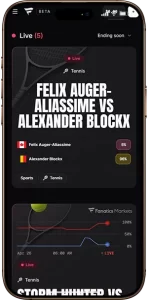
Fanatics Markets keeps its feature set intentionally simple, prioritizing clarity and ease of use over advanced trading tools. That’s a deliberate choice aimed at mainstream users rather than professional traders, and for the most part, it works. You won’t find complex charting packages or algorithmic order types, but what you do get is functional, transparent, and easy to understand.
The core trading interface revolves around market orders and limit orders. Market orders execute immediately at the best available price, giving you instant access to a position. Limit orders let you set your desired price and wait for the market to come to you.
During my testing, I used both extensively. Market orders were perfect for high-liquidity sports markets where prices moved quickly, while limit orders gave me price control in slower political and finance markets where I wanted to avoid chasing momentum.
One feature I appreciated was the clear pre-trade confirmation screen. Every time you place an order, the platform shows your total cost, maximum possible payout, and the exchange fee before you commit. There’s no guessing about what you’re paying or what you stand to gain. That transparency builds trust, especially when you’re learning how probability-based contracts work.
Combos (Multi-Contract Trading) let you bundle multiple contracts into a single position; think of it as the prediction market version of a parlay. You pick two or more outcomes, and if all of them settle correctly, your payout multiplies accordingly. Combos are available across major sports and can be identified by the combo icon in the app. Like parlays, the higher payout comes with higher risk; every leg needs to be right.
Real-time price updates are another strength. Contract prices adjust continuously as new information flows into the market, and the app reflects those changes without lag. When I was trading an NBA player prop, every basket moved the price within seconds. That responsiveness is critical for understanding how prediction markets differ from fixed-odds betting.
One common feature is present: position management. You can view your open trades at any time, see their current market value, and exit positions before settlement if you want to lock in a profit or cut a loss. That flexibility matters, especially in markets where events unfold over days or weeks rather than hours.
What features are missing?
What Fanatics Markets doesn’t offer yet is advanced analytics, historical price charts, or portfolio management tools. You can’t view your past trading performance in aggregate, and there’s no built-in profit-and-loss tracking beyond individual positions. For beginners, that simplicity is fine. For experienced traders coming from platforms like Kalshi or traditional brokerages, it will feel limiting.
The platform also doesn’t support automated trading, API access, or algorithmic strategies. This is purely a manual trading environment designed for people who want to express their views on outcomes rather than build complex trading systems. If you’re looking for high-frequency trading capabilities or custom automation, you won’t find them here.
Fanatics Markets Fees & Trading Costs
Fanatics Markets uses a straightforward fee structure that’s clearly disclosed before every trade. You won’t encounter hidden charges, withdrawal fees, or surprise deductions. The simplicity here is one of the platform’s genuine strengths, especially compared to other prediction markets where fee structures can feel opaque.
The primary cost is a small exchange fee applied to each trade. This fee is baked into the transaction and shown on the confirmation screen before you commit. During my testing, the fee was minimal—typically a few cents per contract. For a $10 trade, you might pay $0.10 to $0.15 in fees, depending on the specific market and order size. That’s roughly 1-1.5% per trade, which is competitive with other CFTC-regulated prediction markets.
Importantly, there are no deposit fees, withdrawal fees, or account maintenance charges. Moving money in and out of your Fanatics wallet is free, regardless of the payment method you use. That’s a significant advantage over some platforms that charge for ACH transfers or impose minimum withdrawal amounts.
One area where costs can vary is in the bid-ask spread. Like any exchange, Fanatics Markets operates on an order book model where buyers and sellers meet at specific prices. In high-liquidity markets like major NFL games, the spread between the highest buy price and lowest sell price is tight, often just a cent or two. In thinner markets like niche political events, that spread can widen to $0.05 or more. That spread represents an implicit cost because it affects the price you pay to enter and exit positions.
During my testing, I found that timing mattered more than fees. Placing limit orders rather than market orders often saved more money than the actual exchange fee, especially in less liquid markets. By setting a target price and waiting for the market to come to me, I avoided paying the spread premium that comes with aggressive market orders.
There are no subscription fees or premium tiers. Every user has access to the same markets, same pricing, and same features regardless of account size. That democratized access is consistent with Fanatics’ broader approach to the platform.
Fanatics Markets Trading Limits & Liquidity
Trading limits on Fanatics Markets are generous enough that most casual users won’t ever bump into them. The minimum trade is a single contract, which means you can start with as little as a few cents, depending on the current market price. I tested this by placing several micro-trades in different categories, and the platform handled them without issue. That low barrier to entry is perfect for beginners who want to learn how prediction markets work without risking meaningful capital.
On the upper end, position limits depend on the specific market and overall liquidity. During my testing, I didn’t encounter hard caps on individual trades, but practical constraints kicked in when order books were thin. In high-profile sports markets, I could easily place $50-$100 trades that filled instantly. In smaller political or finance markets, even a $20 limit order sometimes sat unfilled for extended periods.
Liquidity is the most important variable on the platform right now, and it varies dramatically based on the market. In mainstream sports events, especially NFL and NBA games, liquidity felt strong. Orders filled quickly, bid-ask spreads were tight, and prices moved smoothly without dramatic jumps. That’s the experience you want from a prediction market, and Fanatics delivers it in the categories where they have the most user activity.
Outside of those high-traffic markets, liquidity can be frustratingly thin. I placed trades on a congressional vote and a niche economic indicator, and in both cases, my limit orders took 15-20 minutes to fill. The markets weren’t broken, and the pricing wasn’t unreasonable. There simply weren’t enough other traders on the other side of the transaction at that exact moment.
This liquidity gap is the clearest sign that Fanatics Markets is still in its early days. Liquidity comes from user participation, and user participation takes time to build. As more people discover the platform and start trading, order books should deepen and execution should improve across all categories. But if you’re trading here today, you need to manage expectations based on the specific market you’re in.
One practical tip: check the order book depth before placing larger trades. Markets with dozens of contracts available at multiple price levels will give you better execution. Markets with only a handful of contracts listed may require patience or a willingness to move the price yourself.
Fanatics Markets Trading Strategies & Tips
Success on Fanatics Markets isn’t just about predicting outcomes correctly. It’s about understanding how probability-based pricing works, when to enter and exit positions, and how to manage risk across multiple trades.
Here are three actionable strategies that apply specifically to this platform.
Start With Market Orders in High-Liquidity Events, Then Graduate to Limit Orders
When you’re learning how the platform works, stick to major sports markets where liquidity is strong. Use market orders to fill trades instantly and watch how contract prices respond to live action. This gives you immediate feedback and helps you internalize the relationship between probability and price.
Once you’re comfortable, shift to limit orders, especially in slower-moving markets like politics or economics. Setting your target price and waiting for the market to meet you can save money on the bid-ask spread and improve your average entry price. During my testing, I saved 2-5 cents per contract on average by using limit orders instead of chasing the market. Over dozens of trades, that adds up.
The key is knowing when to be patient and when to be aggressive. If you’re trading a breaking news event or a live game where seconds matter, market orders make sense. If you’re positioning ahead of a scheduled announcement or a future election, limit orders give you better price control without sacrificing much.
Trade Probability Corrections, Not Just Final Outcomes
One of the biggest mental shifts in prediction markets is realizing you don’t have to hold until settlement to make money. You’re trading live probabilities, which means profit opportunities exist whenever the market misprices the likelihood of an outcome, even temporarily.
I experienced this while trading an NBA player prop. The contract asked whether a player would score over 24.5 points, and it was priced at $0.60 early in the game. After a strong first quarter, the price jumped to $0.75. I sold my position at that point, locking in a $0.15 profit per contract without waiting for the game to finish. The player eventually cleared the threshold, so the contract settled at $1.00, but I didn’t need to hold that long to realize gains.
This strategy works especially well in sports, where momentum shifts create short-term pricing inefficiencies. If you believe the market is overreacting to a hot streak or undervaluing a likely comeback, you can trade those corrections rather than betting on the final score.
Diversify Across Market Categories and Time Horizons
Fanatics Markets lets you trade sports, politics, economics, and finance all from the same account. Use that variety to manage risk and avoid putting all your capital into one type of event. Sports markets resolve quickly, often within hours. Political and economic markets might take days or weeks. Spreading your positions across different timelines gives you more opportunities to adjust based on new information.
During my testing, I kept about 60% of my positions in sports for quick feedback and liquidity, 30% in politics for medium-term plays, and 10% in economics for longer-term analysis. That mix gave me constant activity in high-liquidity markets while letting me experiment in categories where I had domain knowledge but less confidence in my timing.
This approach also protects you from concentration risk. If every trade you make is tied to the same NFL Sunday slate, one injury or unexpected blowout can wipe out multiple positions at once. By diversifying across categories, you reduce the impact of any single event on your overall performance.
Fanatics Markets vs Other Prediction Markets
Fanatics Markets entered a space that’s already occupied by several established players, each with its own strengths, limitations, and target audience. Understanding how Fanatics stacks up against the competition helps clarify when it makes sense to use this platform versus alternatives.
Fanatics Markets vs Kalshi
This is the most direct comparison. Kalshi is also a CFTC-regulated prediction market available to U.S. users, and it’s been operating longer than Fanatics Markets. That maturity shows immediately in market depth and liquidity.
As we mentioned in our Kalshi prediction market review, it offers a much broader range of markets, including weather, entertainment, commodities, and niche political events that Fanatics doesn’t cover yet.
Liquidity on Kalshi is generally deeper across all categories, and order execution tends to be faster, especially outside of mainstream sports. If you’re trading a congressional vote, a Federal Reserve decision, or an obscure economic indicator, Kalshi will likely give you better fills and tighter spreads.
Where Fanatics Markets has the edge is integration and familiarity. If you already use Fanatics for shopping or sports betting, the transition to Markets is seamless. Your wallet is already funded, your account is already verified, and the interface is already familiar. Kalshi requires you to download a standalone app, create a new account, and learn a platform that’s built entirely around prediction trading.
For experienced prediction market users who prioritize depth and liquidity, Kalshi is the stronger platform today. For Fanatics ecosystem users or beginners who value ease of use and brand trust, Fanatics Markets offers a gentler entry point with significant room to grow.
Fanatics Markets vs FanDuel Predicts
FanDuel Predicts, formerly known as FanDuel Prophet, is FanDuel’s free-to-play prediction game. It’s not a real-money prediction market. You make picks on sports outcomes and compete for prizes, but you’re not trading contracts or risking your own capital.
The appeal of FanDuel Predicts is that it’s completely free and available in nearly every state. There’s no financial risk, and you can build a streak of correct predictions to win cash prizes. But it’s fundamentally different from what Fanatics Markets offers. You can’t exit positions early, you don’t profit from probability corrections, and you’re not trading against other users in a live market.
Fanatics Markets gives you real financial exposure and the ability to manage positions dynamically. You’re trading contracts with actual value that fluctuates based on market consensus. FanDuel Predicts is gamified entertainment that rewards correct predictions but doesn’t let you capitalize on pricing inefficiencies or timing advantages.
If you want to test your prediction skills without financial risk, FanDuel Predicts is a fun option. If you want to actually trade outcomes and capture value from probability shifts, Fanatics Markets is playing a different game entirely.
Fanatics Markets vs Polymarket
Polymarket is the largest and most liquid prediction market globally, operating on blockchain infrastructure and denominated in USDC (a stablecoin). It offers the widest range of markets you’ll find anywhere, from politics and finance to pop culture, technology, and niche current events.
Liquidity on Polymarket is significantly deeper than Fanatics Markets, especially in non-sports categories, and orders typically fill faster across the board.
However, Polymarket operates in a regulatory gray area in the United States. It’s technically restricted for U.S. users, though enforcement has been inconsistent. That uncertainty creates risk that Fanatics Markets simply doesn’t have. Fanatics operates under full CFTC oversight with explicit federal approval.
The other major difference is user experience. Polymarket requires you to manage a crypto wallet, convert fiat currency to USDC, and navigate blockchain transactions. For crypto-native users, that’s no big deal. For mainstream sports fans or casual traders, it’s a significant barrier. Fanatics Markets removes all of that friction by using traditional payment methods and a familiar app interface.
If you want maximum market variety and deep liquidity and are comfortable with crypto tools, Polymarket is objectively stronger today. If you value regulatory clarity, mainstream payment methods, and a familiar app experience, Fanatics Markets is the better fit.
Learn more with our Polymarket platform review.
Fanatics Markets Deposits & Withdrawals
One of Fanatics Markets’ biggest operational advantages is how smoothly money moves in and out of the platform. Funding your account and cashing out is faster and simpler than most standalone prediction markets. Here are the supported payment methods to date:
| Payment Method | Deposits | Withdrawals | Deposit Fee | Notes |
| Online Banking (ACH) | Yes | Yes | Free | 2-3 business days |
| Debit Card | Yes | Yes | 2% | Instant deposits |
| Apple Pay | Yes | No | 2% | Instant deposits; iOS only |
| Wire Transfer | Yes | No* | Free (bank may charge) | Min. $1,000 deposit; min. $10,000 withdrawal |
| Credit Card | No | No | N/A | Not supported |
| PayPal | No | No | N/A | Not available on Fanatics Markets |
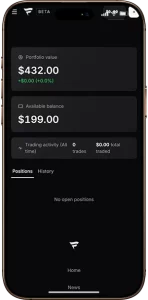
The deposit experience is as smooth as any modern app. I tested multiple methods during my week of use, and everything worked exactly as advertised. ACH transfers took the expected 2-3 days but required no additional verification or manual approval.
Withdrawals are equally straightforward. There are no withdrawal fees, no minimum cash-out amounts, and no arbitrary waiting periods. During testing, I withdrew funds and saw the money hit my account within 24 hours. ACH withdrawals took the standard 2-3 business days, which is typical for any regulated platform.
The lack of credit card support is intentional and aligns with responsible gaming practices. Debit cards work because they draw from existing funds, but credit cards would allow users to trade on borrowed money, which most regulated gambling and trading platforms avoid.
Pro tip: To avoid the 2% deposit fee, use online banking (ACH). It takes 2-3 business days but saves you money on the way in, especially important if you plan to deposit regularly. Also worth noting, the method you deposit with can affect how you withdraw, so think ahead before funding your account.
Fanatics Customer Support & Help Center
Fanatics Markets is still too new to have a fully stress-tested support system, but the foundation is solid. During my testing, I reached out twice with questions—once about a contract settlement timeline and once about how limit orders are prioritized in thin markets. Both times, I received responses within 24 hours via email, and the answers were clear and accurate.
The Help Center within the app covers the basics well. You’ll find articles explaining how event contracts work, how pricing reflects probability, how to place different order types, and how settlement happens. The language is accessible and avoids unnecessary jargon, which makes sense given the platform’s focus on mainstream users. I found the explanations helpful when I was first learning the mechanics, though more advanced topics like order book dynamics and liquidity management aren’t covered in depth.
One area where support could improve is responsiveness during market disputes. I didn’t personally encounter a situation where I disagreed with how a contract was settled, but based on conversations in online communities, some users have reported slower-than-expected resolution times when questioning outcomes. That’s not surprising for a new platform, but it’s worth monitoring as the user base grows and edge cases become more common.
Phone support isn’t available yet, which is a limitation compared to the main Fanatics Sportsbook. For now, you’re relying on email and the in-app help system. That works fine for straightforward questions, but if you’re dealing with a time-sensitive issue or a complex account problem, the lack of live support can be frustrating.
The positive news is that Fanatics has deep experience running customer support at scale through its sportsbook operations. As Markets matures, I expect that infrastructure to carry over more directly. For now, support is functional and professional, but it hasn’t been tested under real pressure yet. If you run into an issue, expect a reasonable turnaround time, but don’t count on instant resolution.
PredictGeek’s Verdict on Fanatics Markets
Fanatics Markets is one of the most approachable ways to start trading prediction markets that we’ve tested. The platform is built on a strong regulatory foundation, and makes something that could feel intimidating genuinely accessible.
You can start with less than a dollar, learn how probability-based contracts work in real time, and trade on outcomes across sports, politics, economics, and finance without needing a background in derivatives or financial markets.
If you’re interested in seeing what prediction market trading feels like, we recommend signing up and starting small. Place a few trades in high-liquidity sports markets to understand the mechanics, experiment with limit orders, and watch how prices respond to live information.
Use what you’ve learned here to avoid common beginner mistakes, and treat your early trades as tuition rather than guaranteed profit. The platform is usable today, and if Fanatics executes on what it’s promised, it could become one of the most interesting ways to engage with real-world outcomes across every major category.
Fanatics Markets Trading FAQs
No. They’re completely different products that happen to share the same app. Fanatics Sportsbook is traditional sports betting regulated at the state level, where you place wagers against the house using fixed odds. Fanatics Markets is a CFTC-regulated prediction market where you trade event contracts with other users, and prices move based on supply and demand. It’s the difference between placing a bet and trading a financial instrument.
You can trade a single contract, and since contract prices range from $0.01 to $0.99, you can realistically start with well under a dollar plus a small exchange fee. This makes it easy to test the platform and learn how prediction markets work without risking meaningful capital.
As of January 2026, no. FanCash applies to retail purchases and the Fanatics Sportsbook, but it doesn’t currently integrate with Markets. Because Fanatics Markets operates as a federally regulated derivatives product, incorporating a rewards currency involves additional compliance complexity. That could change in the future, but for now, you can’t earn or spend FanCash on trades.
Withdrawal speed depends on your chosen method. PayPal and Venmo withdrawals typically process within 24 hours. ACH bank transfers take 2-3 business days. There are no withdrawal fees, no minimum cash-out amounts, and no arbitrary waiting periods.
Fanatics Markets is currently available in 24 states: Alaska, Alabama, California, Delaware, Florida, Georgia, Hawaii, Idaho, Maine, Minnesota, Mississippi, North Dakota, Nebraska, New Hampshire, New Mexico, Oklahoma, Oregon, Rhode Island, South Carolina, South Dakota, Texas, Utah, Washington, and Wisconsin. This includes several large states like California and Texas where traditional online sports betting is not legal.
Yes. Customer funds are held with Crypto.com Derivatives North America, a CFTC-registered exchange, under standard segregation requirements. That means your money is kept separate from company operating funds. The platform also uses the same security infrastructure as the main Fanatics app, and responsible gaming controls apply automatically to Markets activity.
Yes. You can sell your contracts at any time before the market settles at the current market price. This lets you lock in profits if the price has moved in your favor or cut losses if your position is moving against you. You’re not locked into holding until the final outcome is determined.
